My first musical performance was in Miss German's second grade class when I played Somewhere Over The Rainbow on a Melodica. I moved on to play the clarinet in the fourth grade.
 In the spring of 1963 I got my first guitar. It was a circa 1940's Harmony Patrician that had a bowed neck and the strings were at least an inch above the neck at the 12th fret. It was strung with Black Diamond Strings which came in one heavy duty size that was sure to induce bleeding of the fingers. Along with the guitar I got a pitch pipe and an extra set of strings. All for $20 from Wills Pawn Shop.
 About a year later my Dad bought me a 1957 Fender Stratocaster for $150 and an amplifier from the local Western Auto store.
I traded the ancient Stratocaster two years later for a shiny new Gibson Trini Lopez Standard, which I still have.
I also saved up and bought a 1965 Fender Deluxe Reverb which I also sold. I wish I still had it.
However I am more than satisfied with the instruments I currently own.
I think many of folks my age go through a period where they would like to get some of the things they could not afford when they were younger. Guitarists refer to this as G.A.S. or Guitar Acquisition Syndrome. I've been there and found it is less than satisfying. There are several magazines devoted to all the nice old guitars floating around that are currently priced beyond reason.
In fact that $150 1957 Stratocaster that I traded in 1967 is possibly worth around $20,000 in today's market, especially since it came with the original tweed case.
Instrument manufacturers have taken note of this and now produce affordable reproductions of older instruments. They also produce top of the line custom made instruments for wealthy musicians (which is somewhat of a misnomer).

Aside from learning more and more about playing the guitar, I have also learned how to adjust my guitars to respond to my touch.
One of my favorite guitars is a pieced together Stratocaster that I have assembled from parts. The body is from a Japanese stratocaster copy. The neck is from a 1980's American Stratocaster and has a roller nut. The tuning keys are Gotoh locking keys and the pickups, pickguard and electronics are manufactured by the Carvin company using 3 AP11 Carvin pickups with the center pickup wound in reverse to cut down on 60 cycle hum. The neat thing about the electronics is a switch that turns on the bridge pickup so I can use all 3 pickups at once or the neck and bridge pickup. This is not possible on a conventional Fender Stratocaster.

The other guitars that I own, aside from the Trini Lopez, are fairly low end but they are very playable.

I seldom use my 1974 Ovation Classical Electric Model 1613.

Likewise I seldom take out my 1971 Giannini 12 string Craviola.

I have a 1966 Hagstrom HII-B1/F400 bass that seldom gets played.
I also have an unidentifiable mid 1960's guitar that hasn't been out of the case in years. I modified that one with a preamp and some phase switches for the pickups.

I picked up an Epiphone Special II that is sort of a Les Paul thing for $75 at a music show auction. I put a string bender on that guitar. I don't particularly like it because the pickups are overwound and are made for distortion. At least it plays well.

When I turned 40 I got a guitar made for Willis Music Company by Samick. Willis used the brand name Yakima on this line of instruments, but I was assured from the staff at Willis it was manufactured by Samick in Korea. The guitar has lots of inlay on the neck and both sides of the slotted headstock. The top of the neck is carved. The top is solid spruce, but the back and sides are laminated. It doesn't sound bad, but it's definitely not going to compete with a solid wood guitar. It was discounted because of a blemish on the side.

My other six string acoustic is called a Seagull Grand. This is a parlor sized guitar with a regular sized neck that joins at the 14th fret. The top is solid Candian cedar. The back and sides are triple laminated Canadian cherry that run in oposite directions. The headstock is tiny. I've ground the tusq saddle down as low as I could. It is my favorite sitting on the porch/picking guitar. The sound is not loud, but it is very musical. Like some of my other instruments, it has a blemish in the top. There is a small crack in the wood grain that is not all the way through. It could be repaired, but it doesn't bother me.
 I have another parlor guitar that dates back to the late 1800's which is made by a company called Harwood, From a city in New York state that bears the same name. The guitar's top is made from ancient spruce and the back and sides are rosewood. It needs to be repaired, so I seldom play it. The tuners are ancient and appear to be hand forged. The ivory buttons are disintergrating. The neck is V shaped. I imagine this is to eliminate warp. I don't know what wood was used for the neck. I imagine it is mahogany. The slotted headstock is squared off in Martin fashion. The back of the headstock has a strap button and the Harwood logo branded into the wood. The logo is also branded inside the guitar at the butt of the neck.
 My other guitar that gets the most play is a DeArmond M-72 model that I purchased in 2004 during a close out. I really like this guitar. It wasn't what I ordered. I ordered a red guitar and the company sent out a grey guitar. But it grew on me. It has two DeArmond Goldtone pickups a tune-o-matic style bridge with a stop tail piece. The top of the guitar is flat and made from flamed maple, the back is mahogany and is chambered to cut down on weight. The neck is mahogany with Grover tuners. The single cutaway is rounded in Venetian style.

As far as amplifiers I have an old Yamaha G50-112 that is a solid state amplifier manufactured in the mid 1970's. It's in excellent shape. It has a 4 band parametric eq and a wonderful spring reverb.

A few years ago I purchased a Pignose G40-V. I do not like the internal 10 inch speaker at all as it is harsh and too bright. However when I hook it to a 12 inch woofer it brings out the warmth of the tubes.
 My favorite amp is my mid 1970's Fender Vibrochamp. Fender makes the best amps in the world in my opinion.
The Vibrochamp is so simple and the sound is so musical despite the little 8" speaker. I hook the Piggy and the Vibrochamp to a Zoom pedal for reverb, delay and tremolo. It's funny I like the tremolo from the pedal better than the internal tremolo on the Vibrochamp.

If I could just get one of those Talent pedals to connect my guitars to I'd be all set.
Some of today's text & a photo were from Citybeat. I've mentioned Citybeat News before in my blog. It is a free newspaper that comes out once a week. I am generally not in agreement with their left-wing slant. I will say their writing. layout and editing staff does an excellent job.
In last week's issue an article caught my attention regarding a murderer that had been paroled due to what I consider Divine intervention.
 William Moore had been placed on Death Row in a prison somewhere in the United States.
During his stay he became penitant and was befriended by a college student that went by the name of John Dear.
In his own words, “I met a guy named John Dear, he’s a Catholic Jesuit priest now, but when I met John he had just graduated (from) college and was between going to Jesuit school,” Moore says. “He started to come visit and later on he spent a year or two in India with Mother Theresa, and while he was there he told her about his visiting me and my case. I had an execution date on Aug. 22, 1990 … and John had told Mother Theresa about it and asked her to call the parole board. She told John that she had taken a vow of poverty and did not have the finances to call the U.S".
“Word … was transmitted to the parole board that Mother Theresa wanted to talk to them; the chairman of the parole board called her and asked her what did she want. She told him he needed to do what Jesus would do.”
The parole board commuted Moore’s sentence to life, and within a year he was eligible for parole. Since his release in 1991 he’s been true to his commitment to his adopted family: He’s become an ordained minister and travels the country talking to young people, prisoners, church groups and anyone who wants to benefit from his experiences with the death penalty.
I don't know what to think about the issue of the death penalty. I suppose it is like those other hot issues that come up so darn often. When we look at them collectively it is easy to form an opinion, however on an individual basis everything isn't so black and white.
 For instance there is this fellow, Richard Cooey, on Death Row in Ohio that is scheduled for execution and has filed an appeal on the basis that he is too fat. The guy is 5 feet 7 inches and weighs 267 and claims his veins will collapse during IV insertion. Which in his mind is cruel and unusual. He didn't think so much about cruelty when he raped and murdered two University of Akron college students 22 years earlier.
So what is the difference between these two men? William Moore was penitant, sought forgiveness and sought God. I cannot speak for Richard Cooey, but in his own words he is fearful to be put to death, but he does not appear to be remorseful nor does he ask to be forgiven.
I say the difference is best explained by the Apostle Paul in the Book of Romans.
"But your sinful nature does not control you. The Holy Spirit controls you. The Spirit of God lives in you. Anyone who does not have the Spirit of Christ does not belong to Christ. "
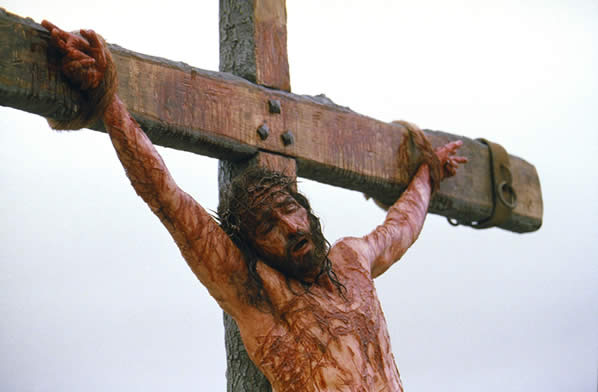 It is almost impossible to explain to someone who has not been touch by the Lord. It is clear that William Moore has the Spirit of Christ dwelling within. Because of that his desire is do to what is right and good. He wants to serve the Lord. And the Lord honored his desire.
 The United States has managed in the past several decades to eliminate God from politics, school, law and government. As citizens we are told that we have an individual right to personal beliefs, but collectively we cannot discuss God within the context of politics, school, the courtroom or government buildings.
How many times have the ACLU sued municipal and state governments because the 10 Commandments were posted in buildings or on public grounds? 
The Republican Vice Presidential candidate is mocked and buffooned in the media for being an outspoken and committed Christian. The Democratic Presidential Candidate was vigorously questioned about his connections with the bigoted pastor of the congregation he attended. He was forced out of his church.

Now our country is imperilled by a crash of the monetary system. Could this happened due to God and God's rules being eliminated from our American way of life? I say yes.

Before the 10 Commandments we had the Noahide Laws. These were 7 natural, common sense rules set out for a just society.
 1. You should not have any idols before God.
2. You shall not murder.
3. You shall not steal.
4. You shall not commit adultery.
5. You shall not blasphemy God's Name.
6. You shall not eat flesh while it is still alive.
7. You shall set up judiciary to enforce the six aforementioned rules fairly and
effectively.
I can see no reason why these rules would be a hardship for any citizen to follow regardless of their personal beliefs.
Rule One. I believe this prohibition is not pointed at those established churches that have statuary or portraits bedecking their sanctuary. However those who practice Santeria or pray to pictures or statues are going to have a problem.
Rule Two. No civil human being should have issues with this rule.
 Rule Three. The current crisis in our country's banking and financial industry can all be traced back to violation of this law. Greedy lenders not only duped the innocent, but forced usurious requirements on borrowers that consequentially left them with the option to look for a better loan or default on the loan.
Unrealistic interest charged by banks, credit card companies and the mortgage industry has left this country in shambles. I find no difference in usury and theft.

Rule Four: From the last census in 2005 that measured 2,236,000 marriages that took place that year, 7.5 people out of 1,000 were married and 3.6 people out of 1,000 became divorced. That is over a 50% divorce rate. Though some of this marital trauma may have been attributed to leaving the cap off the toothpaste or snoring, my best guess is adultery played a big role in the decision for couples to call it quits. Unfortunately now couples choose not to commit themselves in marriage which also causes them not to commit themselves to their children.
Rule Five: I've always viewed this in a manner that is different from those who feel this applies only to profane language. Don't get me wrong, profanity has no value in a decent society other than to prove the user is an idiot. Many profane people use profanity as second nature and probably don't realize what garbage is spewing from their mouths. I believe this prohibition applies to those that would seek to purposely and deliberately speak against God or curse God or against those whose actions and deeds cause others to curse God.

Rule Six: Maybe those guys on the Food Network that go around to other countries and eat weird food may have a problem with this prohibition. This should not be an issue in the USA. 
Rule Seven: One would hope that justice is fair and blind and administered equally, but that is not reality. If a brother wrongs you and you cannot settle the issue between each other, it's gonna' cost you plenty to take it to court. Even if you win your claim it may be revoked upon appeal. This request to set up fair and impartial courts needs to be enforced.
 My wife and I spent yesterday at the Cincinnati Art Museum.


 The same thing holds true about The Flood.