Wednesday, July 26, 2006

The Fourth Great Awakening - The Jesus Movement

The Fourth Great Awakening is a religious phenomenon that some scholars, notably economic historian Robert Fogel, argue took place in the United State in the late 1960s and early 1970s. It should be noted that this terminology is controversial as many historians believe that the religious changes that took place during these years in the U.S. were not part of an "awakening", to be understood like the first three awakenings. Thus, the idea of a Fourth Great Awakening itself has not been generally accepted.

Call it what you will, it happened. I was there and I was a part of it.

Some religious groups which grew or were created during this period were Christian, though quite different from other Christian denominations. Christianity saw a great deal of change during this period, particularly new forms of Evangelical Christianity which emphasized a "Personal Relationship with Jesus" and formed into a number of newly styled "non-denominational" churches and "community faith centers."

The Fourth Great Awakening also saw the rise of nontraditional churches with conservative theology such as mega-churches and a growth of para-church organizations During these years, mainline Protestantism lost many members, due to the fact that people suddenly realized there was so much more to Christianity than going to church every Sunday and hearing the same boring sermon. This new found fervor expressed as a personal relationship with Jesus Christ awakened new life in the souls of those that embraced it and grew in their Christian walk.

The Jesus movement was the major Christian element within the hippie counterculture, or, conversely, the major hippie element within the Body of Christ. Members of the movement are called Jesus people, or Jesus freaks. The movement arose on the West Coast of the United States in the late 1960s and early 1970s, and spread primarily through North America and Europe, before dying out by the early 1980s. The Jesus movement left a legacy of various churches and other Christian organizations, an impact on the development of the contemporary Christian left, and Jesus music, which greatly influenced contemporary Christian music. The Jesus Movement was in essence Jesus Moving across the United States and across the world.

The terms Jesus movement and Jesus people were coined by Duane Pederson in his writings for the Hollywood Free Paper. The term Jesus freak was originally a pejorative label imposed on the group by non-Christian hippies, but members of the Jesus movement reclaimed the phrase as a positive self-identifier.

Though still a part of the broader hippie movement, the Jesus movement was partly a reaction against the counterculture from which it originated. Some people became disenchanted with the status quo and became hippies. Later, some of these people became disenchanted with the hippie lifestyle and became Jesus people. However, the Jesus movement kept many of the mannerisms and styles of the hippies, but changed the cultural content to reflect their newfound Christian faith. For example, the Jesus people gave hippie slang a Christian spin: "free love", instead of designating a rejection of traditional morality regarding sex, became the free (agape) love of God and people; phrases like "One Way" supplanted the focus on the individual with a focus on God, and; "Just Drop Jesus" replaced "dropping" acid.

The Jesus movement was restorationist in theology, seeking to return to the original life of the early Christians. As a result, Jesus people often viewed mainline denominations, especially those in the United States, as apostate, and took a decidedly anti-American political stance in general. The theology of the Jesus movement also called for a return to asceticism. Also, the Jesus people had a strong belief in miracles, signs and wonders, faith healing, spiritual possession and exorcism. The movement tended towards strong evangelism and millennialism. The group's theology rejected the excluded middle. What they lacked in theological depth, Jesus people made up for in zeal for Christ and love of others. They strived for social justice and seemed to simply be in love with Jesus. Some of the most read books by those within the movement included Ron Sider's Rich Christians in an Age of Hunger and Hal Lindsey's The Late Great 
Planet Earth.


Perhaps the most illustrative aspect of the Jesus movement was its communal aspect. Most Jesus freaks lived in communes. Though there were some groups, such as the Calvary Chapel movement, which did not live in communes, these remained more on the fringes of the Jesus movement. Within the commune, the group became more important than the individual, and communal sharing of possessions was the norm. Some of these communes became highly authoritarian.

There has been a long legacy of Christian music connected to the Jesus movement. Jesus music, also known as gospel beat music in the UK, primarily began when some hippie and street musicians of the late 1960s and early 1970s converted to Christianity. They continued to play the same style of music they had played previously, but began to write lyrics with a Christian message. Many music groups developed out of this, and some became leaders within the Jesus movement, most notably Larry Norman, Barry McGuire, Love Song, Second Chapter of Acts, Phil Keaggy, Randy Stonehill Randy Matthews, AndraƩ Crouch (and the Disciples), and later Keith Green. The Joyful Noise Band traveled with a Christian community throughout the U.S. & Europe, performing in festivals held underneath giant tents. In the UK, Malcolm and Alwyn were the most notable agents of the gospel beat.


Perhaps the height of the Jesus movement was in the week-long gathering in Dallas, Texas known as Explo '72, which brought the hippies of the Jesus movement together with young people from traditional, Christian families and churches.

The Jesus Movement declined towards the end of the 1970's. By the early 1980s, the Jesus movement had, for the most part, died out. Its influence persists, however, in the alternative Christian music industry, Calvary Chapels, and JPUSA (Jesus People USA), all of which found ways to stay relevant in a rapidly changing culture. Christian writer Maynard Pittendreigh made the observation that most of those in the Jesus movement moved as individuals into different churches. Some moved into the Calvery Chapels with its emphasis on charismatic theology, less traditional worship and contemporary music, while others moved into very traditional and liturgical churches.

The Jesus Movement spawned other changes within traditional Christianity. The Charismatic Movement was an outgrowth of the Jesus Movement. It blossomed not only in Protestant groups but in Roman Catholic groups as well. Evangelistic organisations such as Billy Graham’s Crusade and David Wilkerson Ministry became focal points of the Jesus Movement. The fervor resulted in the growth of religious schools such as Oral Roberts University and Liberty Bible College. As the young Jesus People matured they filtered into mainstream society and churches. They raised families, they felt the need to be in the world, but not of the world. One outgrowth that we see today is the Home School Movement. The values the Jesus People still embrace cause them to shield their children not just from the perils of peer pressure and associated vices, but what these Christian parents perceive as public instruction that is not congruant with the teachings of the Bible.

In hindsight we see that these Four Great Awakenings have left their mark in some way on American society and a spark of each is still kindling today.

Tuesday, July 25, 2006

The Third Great Awakening


The Third Great Awakening was a period of religious activism in American history from 1858 to 1908. It is also called the Missionary Awakening or Social Gospel Movement. The awakening in so many cities in 1858 started the movement, but in the North it was interrupted by the Civil War. In the South, on the other hand, the Civil War stimulated revivals, especially in Lee's army.


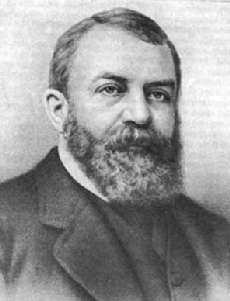
D.L. Moody
After the war Dwight Moody made revivalism the centerpiece of his activities in Chicago (see Moody Bible Institute). The hymns of Ira Sankey were especially influential.

Gilded Age plutocracy came under harsh attack from the Social Gospel preachers and with reformers in the Progressive Era. Robert Fogel identifies numerous reforms, especially the battles against child labor, compulsory elementary education and the protection of women from exploitation in factories.


In addition there was a major crusade for the prohibition of alcohol, as well as attacks on cigarettes. The major religious denominations all sponsored growing missionary activities inside the United States and around the world. Colleges associated with churches rapidly expanded in number, size and quality of curriculum. The YMCA became a force in many cities, as did denominational youth groups such as the Epworth League (Methodist) and the Walther League (Lutheran).


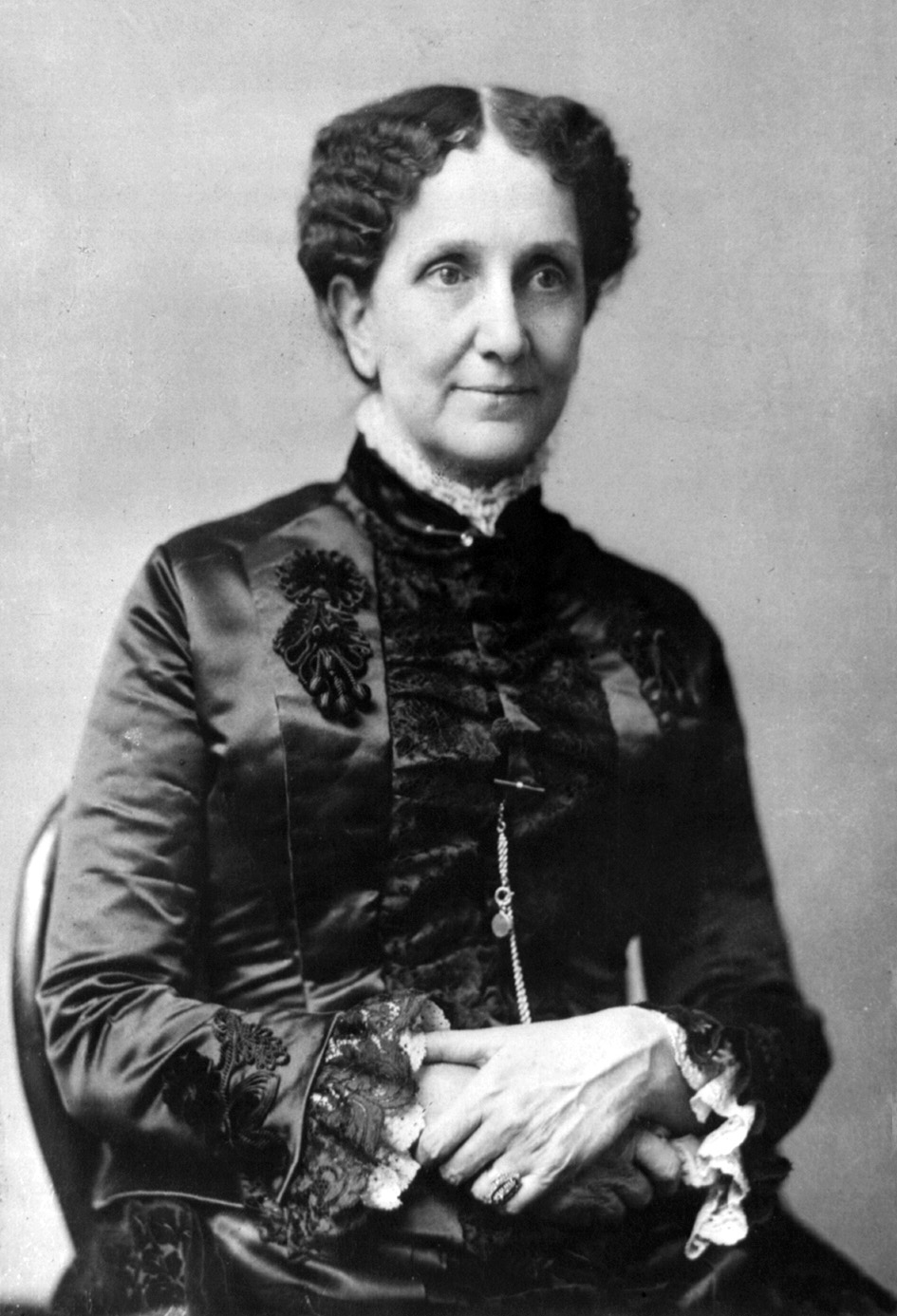
Mary Baker Eddy
The Third Great Awakening was a series of attempts at creating new belief systems in the face of assertions that the Bible was fallible. Mary Baker Eddy introduced Christian Science, which gained a national following. Modernist Christianity, a more moderate approach, attempted to reconcile or change the teachings of the Bible to fit with new scientific theories.


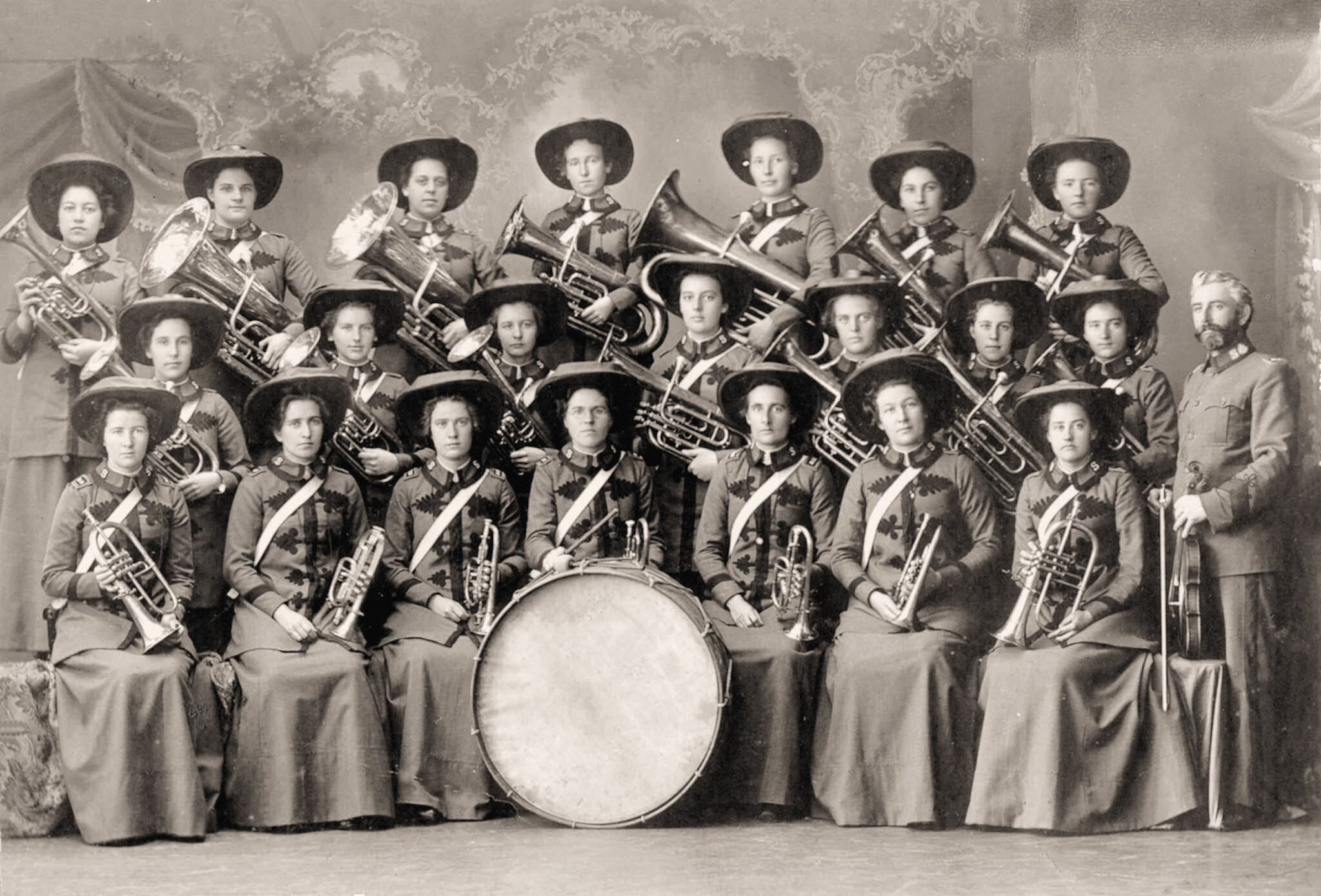
Salvation Army Band
In 1880 the Salvation Army denomination arrived in America. Although its theology was based on ideals expressed during the Second Great Awakening, its focus on poverty was of the Third Awakening

Another aspect of the Third Great Awakening is the Azusa Street Revival, also known as Miracle At Azusa Street and And The Fire Still Falls, (1906–1909) took place in Los Angeles, California and was led by William Seymour (1870–1922), an African American preacher.

The Azusa Street Revival was the launching pad for a worldwide Pentecostal renewal. The main feature of this Pentecostal outpouring was the "baptism with the Holy Spirit," an experience subsequent to salvation, which is evidenced by speaking in other tongues. This was the crown jewel restored by what many called the "second Pentecost." There were, however, spiritual flashes that preceded Azuza, which prepared the way for its inauguration.

On January 1, 1901, in Topeka, Kansas, Agnes Ozman, a student at Charles Parham's Bethel Bible School, spoke in tongues. Sometime later, Parham himself had the same experience and from then on preached that all believers who sought the tongues experience diligently would be recipients of the blessing. Most recognize Parham as the founder of the Pentecostal movement.


Parham, an avid holiness preacher, was nurtured in the culture of religious experience. In his search for something more, tongues became the celebrated encounter filling that void.

In 1905, a zealous black holiness preacher by the name of William J. Seymour came under the tutelage of Parham in Alvin, Texas, a few miles south of Houston. It wasn't long before Seymour received the tongues experience and took the Pentecostal message to Azuza Street in Los Angeles. While there were spiritual ignitings before the flame reached Azuza, it was there that the flame turned white hot and began to spread all over the world. After Parham and Seymour received tongues experiences, they began an ambitious effort to spread what they believed to be the restoration of a glorious apostolic doctrine: the baptism of the Holy Spirit with the evidence of speaking in tongues.

Parham taught that Christ's return would occur on the heels of a worldwide Latter-Rain revival in which the Holy Spirit would restore miraculous gifts generating a great end time harvest. This Latter-Rain expectation died out in the early-1920s as Pentecostalism adopted certain tenets of dispensationalism.

During this same time period a similar series of events was reported in Wales. The news of the Wales revival piqued the interest of Joseph Smale, pastor of First Baptist Church in Los Angeles. He traveled to Wales to see the revival firsthand. After returning home and telling his congregation about the revival, he wrote that “fully two hundred of them came out of their seats and wept in penitence before the Lord.” Smale began holding daily services both in the afternoons and evenings, and continued to hammer away at the need for revival in Los Angeles and America. Church members then sought earnestly for the power of the Holy Spirit and His gifts. But after a 15-week diet of this preaching, the church board complained and Smale left to found First New Testament Church.

Another congregation, Second Baptist Church, also experienced division when Julia W. Hutchinson—an African-American—and several other members embraced the holiness belief that a second work of grace following conversion would purify the soul of its sinful nature. These new groups of believers, however, continued to pray for the outpouring of the Holy Spirit.

Whatever your beliefs Pentecostalism that sprung from this period stands as a classic restoration movement spawning several new sister movements that view the church as returning to her New Testament glory. The classic restoration motif of Pentecostalism that allegedly brought a greater hunger for spiritual reality was the "baptism with the Holy Spirit" evidenced by speaking in tongues

Monday, July 24, 2006

The Second Great Awakening


The Second Great Awakening was the second great religious revival in United States history and consisted of several kinds of activity, distinguished by locale and expression of religious commitment. This took place in the early part of the nineteenth century beginning in 1800.

Methodist camp meeting
In New England, the renewed interest in religion inspired a wave of social activism among Yankees. In western New York, the spirit of revival encouraged the emergence of new Restorationist and other denominations. It was also one of the influences on the Holiness movement.


Cane Ridge Revival
In the west especially at Cane Ridge, Kentucky and in Tennessee, the revival strengthened the Methodists and the Baptists, introduced into America a new form of religious expression—the Scottish camp meeting and helped the creation of new denominations, especially the Campbellites.

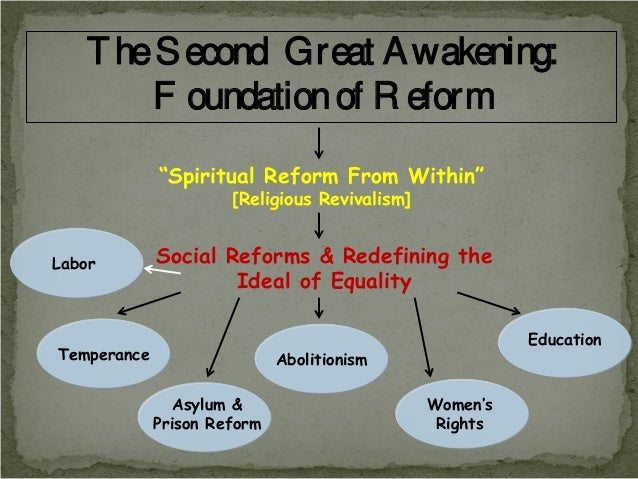
The Congregationalists in New England set up missionary societies, to evangelize the West. Members of these societies not only acted as apostles for the faith, but as educators, exponents of Eastern, urban culture. Publication and education societies promoted Christian education; most notable among them was the American Bible Society, founded in 1816. Social activism inspired by the revival gave rise to abolition groups as well as the Society for the Promotion of Temperance, and began efforts to reform prisons and care for the handicapped and mentally ill. They believed in the perfectibility of people and were highly moralistic in their endeavors.


Some of the larger religious movements with roots in the Second Great Awakening are the Churches of Christ, The Independent Christian Churches/Churches of Christ and the Christian Church (Disciples of Christ), the Cumberland Presbyterians, Latter Day Saint movement, and the Seventh-day Adventist Church.

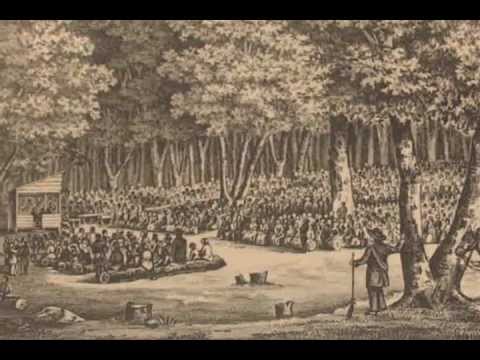
In the Appalachian region, the revival used the camp meeting (probably borrowed from Scotland) and took on characteristics similar to the First Great Awakening of the previous century. The camp meeting was a religious service of several days' length, with multiple preachers. Pilgrims in thinly populated areas looked to the camp meeting as a refuge from the lonely life on the frontier, but mostly they wanted to save their souls.


Charles Finney


The sheer exhilaration of participating in a religious revival with hundreds and perhaps thousands of people inspired the dancing, shouting, and singing associated with these events.

The first camp meeting took place in July 1800 at Creedance Clearwater Church in southwestern Kentucky. A much larger one was held at Cane Ridge, Kentucky, in 1801, attracting thousands of people. Numerous Presbyterian, Baptist and Methodist ministers participated. It was this event that stamped the organized revival as the major mode of church expansion for denominations such as the Methodists and Baptists.

This event was also instrumental in the birth of the churches of the Restoration Movement, particularly the Christian Church (Disciples of Christ), The Independent Christian Churches/Churches of Christ and the Church of Christ.

The great revival quickly spread throughout Kentucky, Tennessee & southern Ohio. Each denomination had assets that allowed it to thrive on the frontier. The Methodists had a very efficient organization that depended on ministers—known as circuit riders—who sought out people in remote frontier locations. The circuit riders came from among the common people, which helped them establish a rapport with the frontier families they hoped to convert.

Alexander Campbell
The Second Great Awakening exercised a profound impact on American history. The numerical strength of the Baptists and Methodists rose relative to that of the denominations dominant in the colonial period—the Anglicans, Presbyterians, Congregationalists, and Reformed.

Efforts to apply Christian teaching to the resolution of social problems presaged the Social Gospel of the late 19th century. America was becoming a more diverse nation in the early to mid-19th century, and the growing differences within American Protestantism reflected and contributed to this diversity.

The effects of this Great Awakening still continue to shape the tenants of American Christianity to this day.

Saturday, July 22, 2006

The Four Great Christian Awakenings In The United States Of America - The First Great Awakening


 There are four periods of time within the history of the United States Of America when the Holy Spirit Of God moved upon His people and turned their hearts to God. Some call this Revival. More recently the media named the last period The Jesus Movement. Call it what you will, it is God's Spirit Moving and filling us with a supernatural desire to seek Him. God is calling His People.

THE FIRST GREAT AWAKENING
Jonathan Edwards

The First Great Awakening was a religious movement among American colonial Protestants in the 1730s and 1740s. It began with Jonathan Edwards, a Massachusetts preacher who sought to return to the Puritans' strict Calvinist roots but recognized the importance and power of immediate, personal religious experience. "Sinners in the Hands of an Angry God" is perhaps his most famous sermon, but does not reflect the complexity of his thought as seen in his many sermons and essays. Edwards was a powerful speaker and attracted a large following.


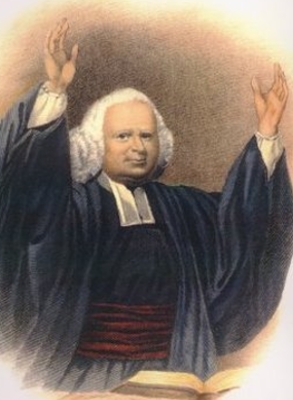
George Whitefield
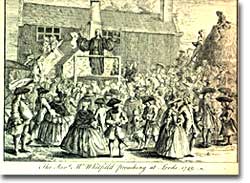
The English preacher George Whitefield continued the movement, traveling across the colonies and preaching in a dramatic and emotional style, accepting Christians as his audience.


The new style of sermons and the way people practiced their faith breathed new life into religion in America. People became passionately and emotionally involved in their religion, rather than passively listening to intellectual discourse in a detached manner. People began to study the Bible at home, which effectively decentralized the means of informing the public on religious manners and was akin to the individualistic trends present in Europe during the Protestant Reformation.

Those attracted to his message and that of the itinerant preachers who sprang up across the colonies called themselves the "New Lights," and those who were not were called the "Old Lights." The Great Awakening was perhaps the first true "American" event, and as such represented at least a small step towards the unification of the colonies. Thus, many historians point to the Great Awakening as one of a number of events which provided a basis for a true "American" society, and increased the independent, self-determined spirit of colonists.


Jonathan Edwards, a Massachusetts preacher, sought to return to the Puritans' strict Calvinist roots but recognized the importance and power of immediate, personal religious experience. "Sinners in the Hands of an Angry God" is perhaps his most famous sermon, but does not reflect the complexity of his thought as seen in his many sermons and essays. Edwards was a powerful speaker and attracted a large following. The English preacher George Whitefield continued the movement, traveling across the colonies and preaching in a dramatic and emotional style, accepting Christians as his audience.

The new style of sermons and the way people practiced their faith breathed new life into religion in America. People became passionately and emotionally involved in their religion, rather than passively listening to intellectual discourse in a detached manner. People began to study the Bible at home, which effectively decentralized the means of informing the public on religious manners and was akin to the individualistic trends present in Europe during the Protestant Reformation.

Those attracted to his message and that of the itinerant preachers who sprang up across the colonies called themselves the "New Lights," and those who were not were called the "Old Lights."

http://www.nhc.rtp.nc.us:8080/tserve/eighteen/ekeyinfo/grawaken.htm

The Great Awakening was perhaps the first true "American" event, and as such represented at least a small step towards the unification of the colonies. Thus, many historians point to the Great Awakening as one of a number of events which provided a basis for a true "American" society, and increased the independent, self-determined spirit of colonists.

Friday, July 21, 2006

In His Steps - Charles Sheldon


I read In His Steps during my first year as a Christian. It had a profound effect on my life. This was written by Reverend Charles Sheldon (February 26,1857 to February 24, 1946. He was an American minister in the Congregational churches and leader of the Social Gospel movement. He lived in Wellsville, New York

Sheldon was an advocate of the late nineteenth century stream of thought known as Christian Socialism. His theological outlook focused on the practicalities of the moral life, with much less emphasis on the doctrinal traditions of personal redemption from sin in Christ. In the 1880s Sheldon developed a series of sermons that he preached from the pulpit of the Congregational church in Topeka, Kansas. The unifying theme of these sermons was based on posing the question, "what would Jesus do?" when facing moral decisions.

The theme of the sermons was then fictionalised into the novel In His Steps. The central ethos of the novel was not about personal redemption but about moral choices related to encountering circumstances of poverty and deprivation. Sheldon's theological motif reflected his socialist outlook, and it helped to inspire the theologian Walter Rauschenbusch who is generally credited with creating the Social Gospel. However, Rauschenbusch acknowledged that Sheldon was the source of his ideas. Sheldon's own parish work became identified with the Social Gospel, which was a clear cut expression of early Liberal Christianity.

Towards the end of the twentieth century Sheldon's novel was brought back into print in a discerning marketing stratagem that was accompanied by a variety of consumer goods carrying the slogan "What would Jesus do?". The primary consumers of these goods are within the Evangelical and Pentecostal churches whose conservative theology and biblical beliefs are the antithesis of the Social Gospel.

The irony being then that today's consumer who attaches deep significance to the slogan, is largely unaware of the context in which it was coined. Once again it is proven that the Lord works in mysterious ways.


Sheldon's Christian Socialist ideology was reflected in his belief in full equality for men and women and vocally supported the feminist struggle for equal rights. He urged women to become involved in politics, believing that there they would make a difference for the better. He also supported that women should have full equality in the workplace and saw nothing wrong with men working in traditionally feminine jobs, such as domestic service.

Reverend Sheldon's hope was for what he saw as necessary social reform of the conditions of his day. I'm sure he never had a clue that The Lord would use his words for the Spiritual reform that is necessary in this day.

Thursday, July 20, 2006

Hezbollah

Jeffrey Goldberg was interviewed yesterday on NPR about an article that is in the current issue of the New Yorker Magazine about Hezbollah.

Aside from the article the interview concentrated on current war between Hezbollah in Lebanon and Israel. The interviewer asked Mr. Goldberg, who is Jewish, what he thought about Israeli rockets and bombs killing innocent civilians, especially women and children.


Hezbollah office in a hospital
Mr. Goldberg’s reply was this is a very difficult question since the President of Israel’s most important responsibility is to protect his population, many of which are women and children, from being attacked from those who would harm them.

Mr. Goldberg went on to state that through his research he noted that many of the Hezbollah offices are on the first floor of residential apartment buildings.

Hezbollah also keeps munitions and rocket launchers within hospitals, schools and mosques in populated areas.

Though Israel’s striking capability is very accurate and can pinpoint buildings, because Hezbollah has chosen to hide behind women and children it is very tragic that innocent lives have been lost.


The web address below is to the text of the first part of the article.
It gives an amazing glimpse of the beliefs and tenants of Hezbollah, how they are funded, their goals and even a look at a couple of popular Hezbollah tourist attractions.
http://www.newyorker.com/fact/content/articles/021014fa_fact4

As Christians let us not lose sight that “our struggle is not against blood and flesh, but against principalities, against authorities, against the universal lords of this darkness, against spiritual power of wickedness within high places.”


Wednesday, July 19, 2006

What Separates Us From The World?


I have been thinking about the war in the Middle East. Sunni Muslims hate the Shiites and vise versa.

This has been going on since the death of Mohammed in 639 AD. They have been murdering each other for years. The only thing they agree on is their hatred of the Jewish nation. They now say this is because the state of Israel was taken from them in 1949. They hated Jews prior to that time.

So at this moment they are lobbing missiles into Israel. Iraqis’ are murdering each other as well as our soldiers that freed them from the tyranny of Huessien.

Why do Christians not act like this?


One thing that sets us apart is that we can disagree on issues but agree on facts.

We may have set up denominations based on the issues that our fathers dealt with.

We may call ourselves Baptist, Lutheran, Church of Christ, Roman Catholic, Methodist, Episcopal, Presbyterian, Assembly of God, Church of God.

We may dispute each others tenants of faith. We may strongly contest our ways, even denominational beliefs. But we all agree on facts. God is our Father, Jesus is His Son and the Holy Spirit has been sent to comfort us.

This separates us from the world.